
On the objects that outlast their owners, and why I have begun to photograph and preserve their stories.
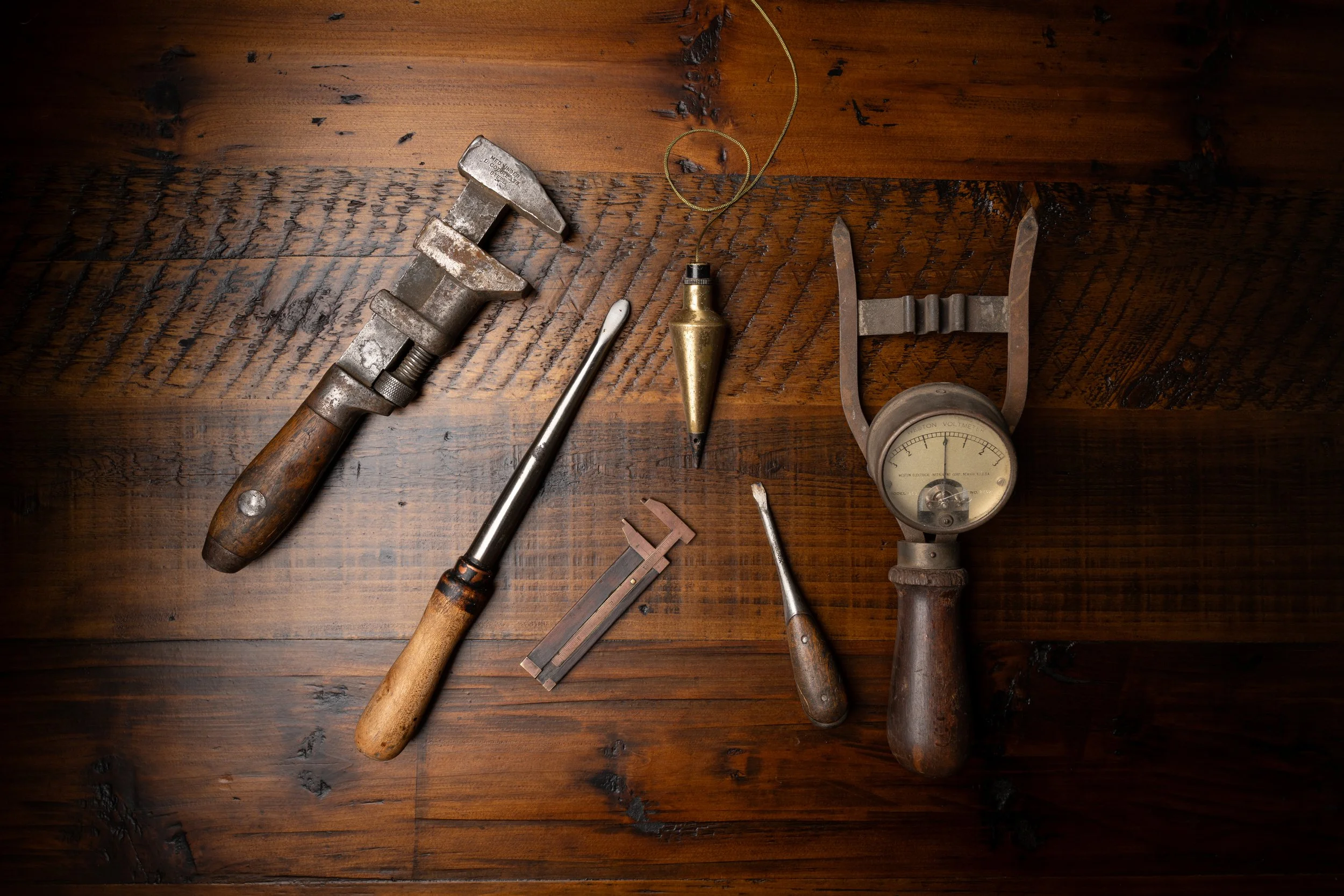
A gathering of objects from the Guildmark collection. Different purposes, materials, and makers, each with a history that extends beyond what we know.
I have always been drawn to what remains. An object can outlast the person who owned it, the work it was made for, and sometimes even the place where it was used. Long after the circumstances of its everyday life have disappeared, the object is still here.
I find myself wondering who picked it up each morning. What they made or repaired with it. Whether they chose it carefully, inherited it, or simply used what was available. Most of those answers are gone. Yet the object often retains traces of the life it lived.
I have long been interested in craftsmanship, engineering, and design—not only in how things were made, but in what their construction and survival might tell us about the people who depended on them. Sometimes an ordinary tool raises more questions for me than an object made to be admired.
That curiosity is what led me to begin the Guildmark Object Archive.
Evidence in the Hand
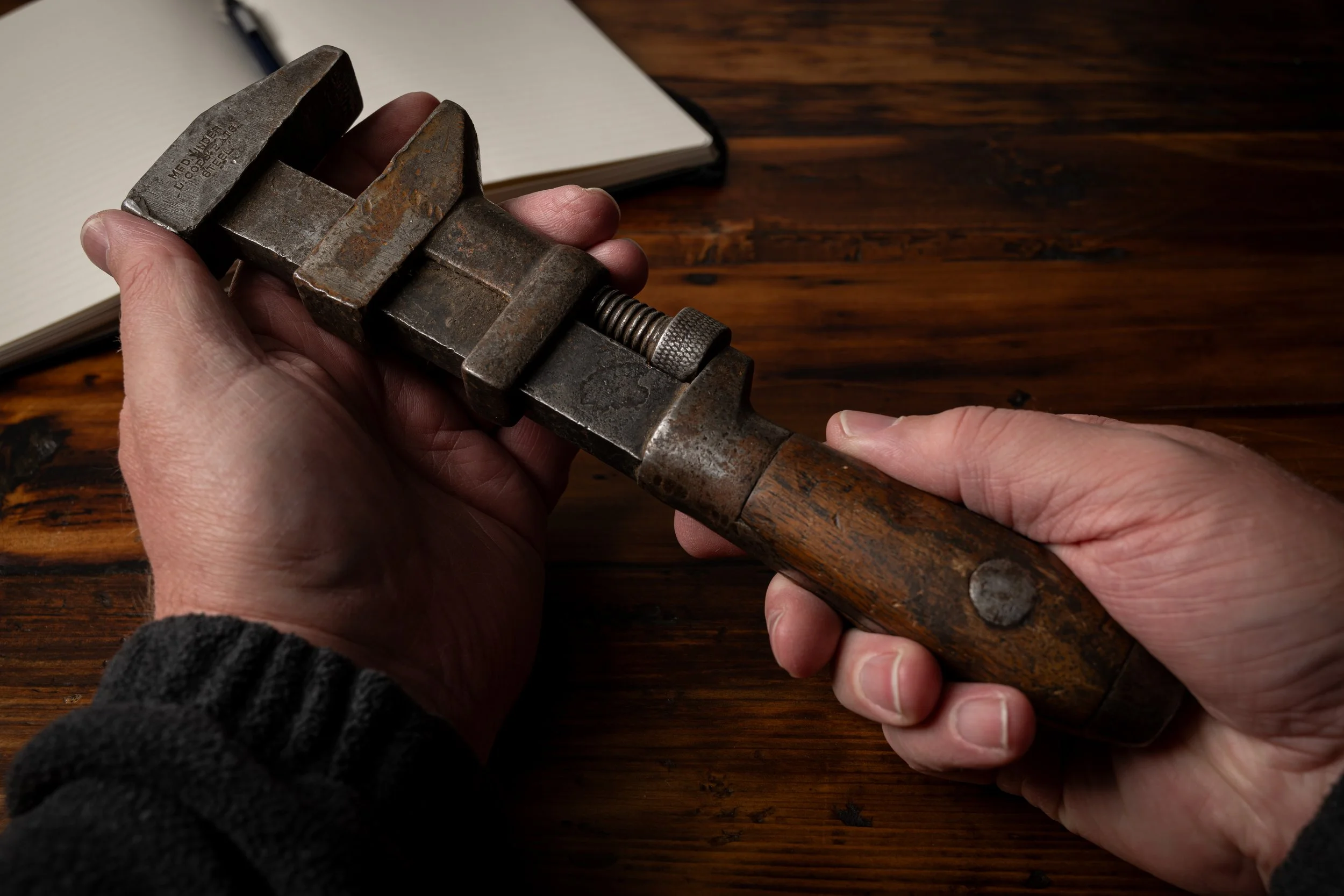
A worn adjustable wrench examined by hand. Its weight, mechanism, and surface wear reveal qualities that photographs alone cannot fully convey.
There is something different about holding an old tool rather than seeing it behind glass or in a photograph. Its weight tells you something about how it was built. The way a mechanism moves can explain a design decision. The shape of a handle suggests how it was meant to rest in the hand.
Wear can be particularly revealing. A polished edge, a dented face, or a handle darkened by years of contact may offer evidence of use. It does not tell us exactly who used it or what happened, but it gives us a place to begin asking better questions.
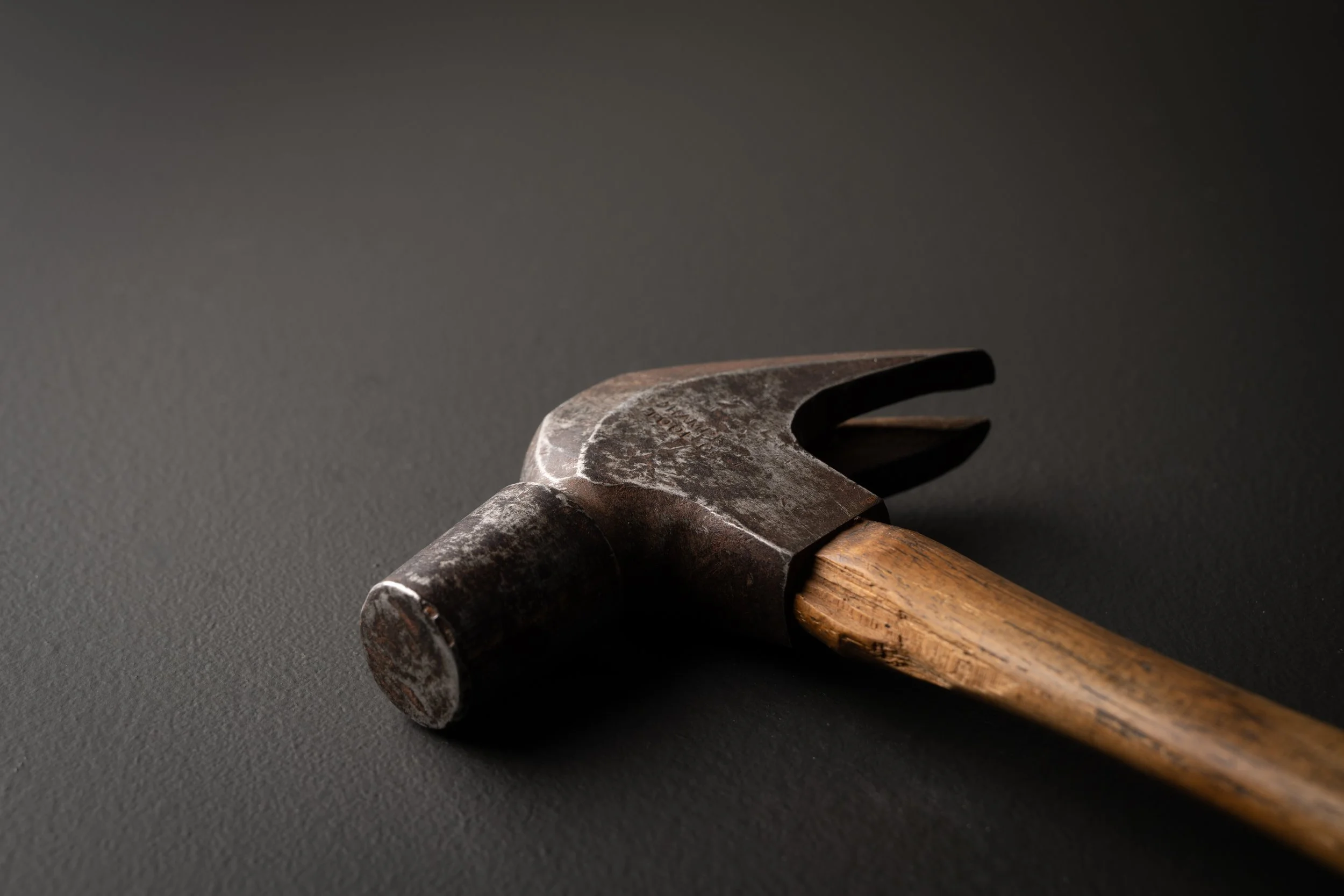
The working head of a farrier’s driving hammer. Scratches, discoloration, and worn surfaces offer evidence to examine without revealing the circumstances of every mark.
"A scar on steel is not a biography."
I do not want to turn every mark into a story I cannot prove. A scar on steel is not a biography. It is, however, a physical record worth observing closely. Sometimes the most respectful thing we can do is acknowledge what an object reveals—and what it does not.
From Found Object to Documented Object
Collecting is only the beginning. Once an object enters the Guildmark collection, I want to give it an identity and preserve the information that arrived with it: its physical characteristics, markings, condition, acquisition details, and any reliable clues to its origin or use.
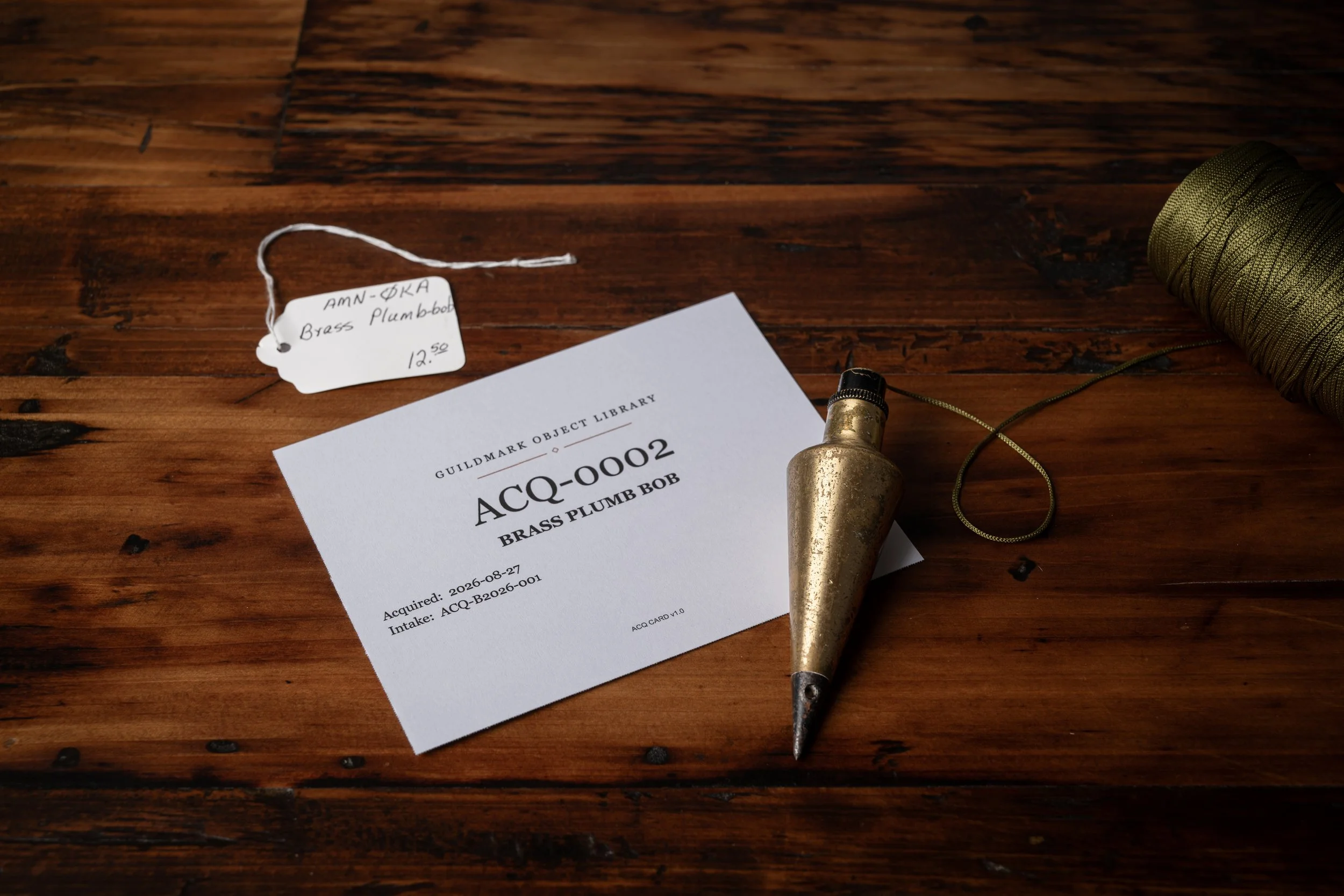
A brass plumb bob with its Guildmark acquisition record and a handwritten purchase tag. Even modest pieces of documentation help preserve what is known of an object’s more recent history.
An old price tag may seem unimportant, but it is part of the object’s more recent journey. A maker’s stamp might lead to a catalog, patent, or company history. Other questions may remain unresolved. The archive should make those distinctions clear rather than filling the gaps with speculation.
Individual Object Studies offer a closer look at how this process works. A wooden-handled marlinspike carries the name STORTZ stamped into its steel shaft. A farrier’s driving hammer bears worn lettering that appears to read CHAMPION TOOL CO.
Both markings offer starting points for research, but neither establishes a complete history. Questions about identification, manufacture, ownership, and use remain. The markings are evidence to investigate, not permission to invent the missing details.
That distinction matters. An archive should preserve the questions alongside the answers, allowing new evidence to deepen—or change—what we understand.
Over time, I hope this process will build more than a visual inventory. It can become a record of ordinary tools and instruments, of how things were designed and made, and of forms of work that are gradually becoming less familiar.
The Intelligence of Things
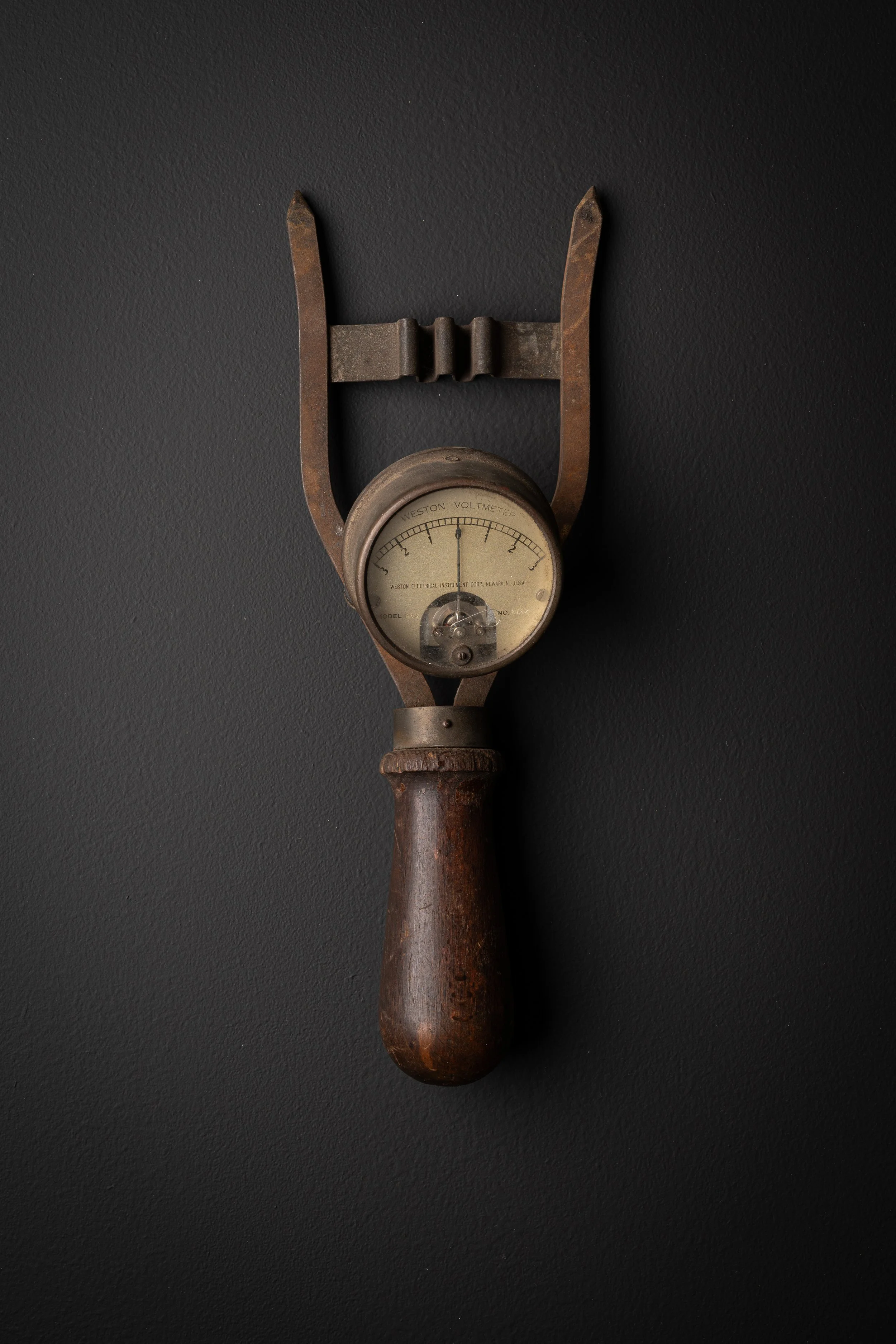
A Weston voltmeter photographed as an object of engineering and design. Its scale, metal contacts, and wooden grip reflect the practical decisions behind its construction.
I am interested not only in age, but in ingenuity. The objects that attract me often solve a practical problem with a surprisingly thoughtful arrangement of materials and parts. A measuring instrument, a wrench, or a simple plumb bob can embody generations of accumulated knowledge.
Their designs also remind us that useful objects were made by people: designers, machinists, toolmakers, and workers whose names may never appear on the object itself.
We may never know those names, but we can still examine the decisions they left behind. Recording the object is one small way of paying attention to that work.
Photography as a Way of Keeping
Photography gives me another way to study these things. The camera asks me to slow down, look at the surface, find the important details, and decide what deserves to be shown. A carefully made photograph cannot replace the object, but it can preserve a clear view of it and invite someone else to look more closely.
Some photographs are made to document. They record proportions, markings, construction, and condition as clearly as possible. Others are more interpretive, placing an object in a setting that helps us consider its purpose or appreciate its form.
Both have a place in the archive, provided the distinction remains clear. Rope photographed alongside a marlinspike can suggest the tool’s working context, but it does not establish where that particular object was used. A horseshoe and nails can help explain the design of a farrier’s hammer without becoming evidence of its former owner’s work.
Photography can help us understand an object without pretending to know more than we do.
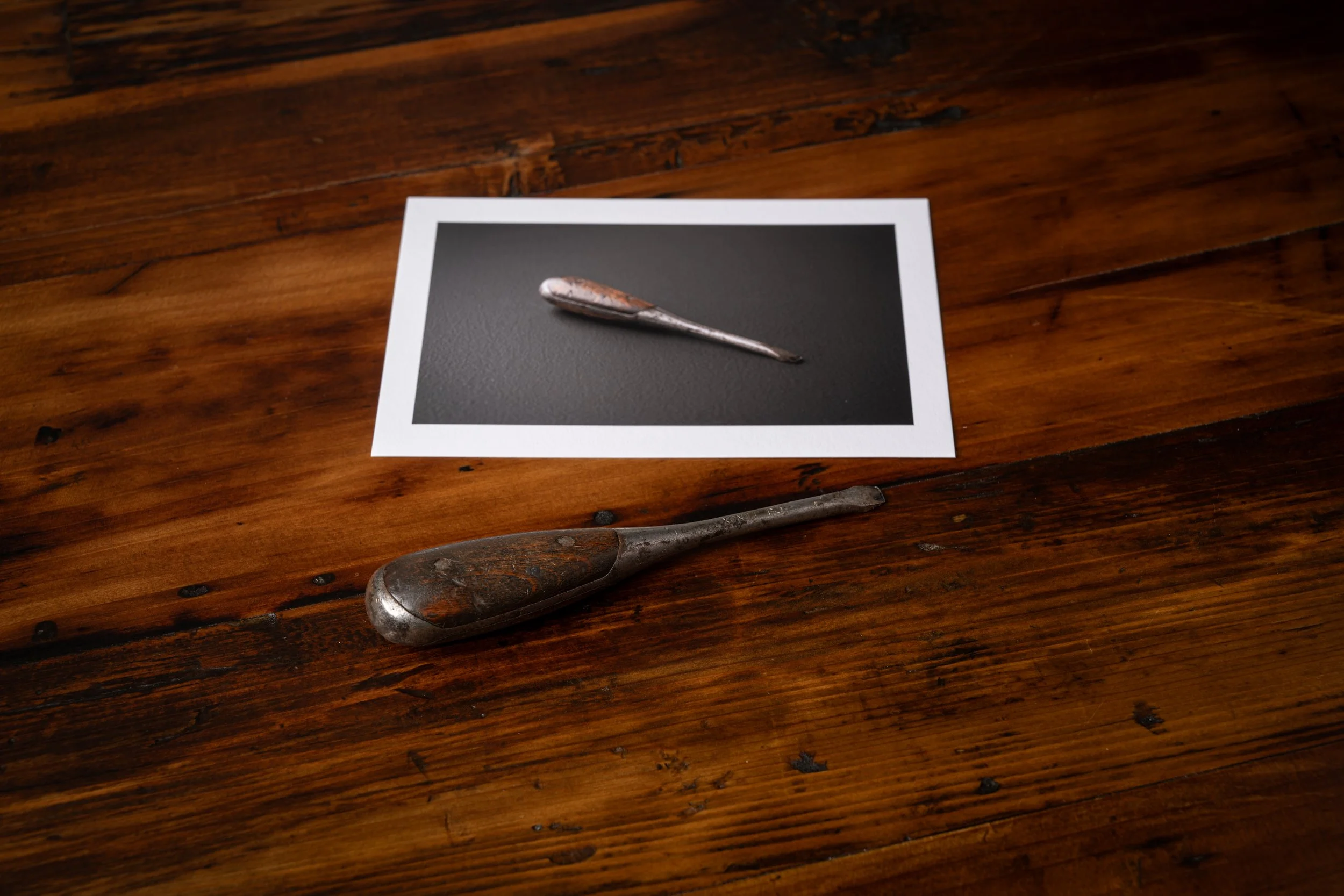
An original hand tool beside a photographic print of the same object. The photograph becomes another record of what has survived.
Making a print carries that process one step further. The image becomes a physical object of its own—something that can be held, revisited, and passed along.
I find something meaningful in that relationship. An object made for practical work becomes the subject of a photograph, and the photograph becomes something physical in its own right. Neither replaces the other. Each preserves something different.
For me, that relationship between the original object, the photograph, and the print is central to Guildmark.
What Remains
I do not expect to recover the complete history of every object. Some will offer names, dates, or documents that lead to a fuller account. Others may give us little more than their construction and the visible evidence of use. Both deserve an honest record.
The purpose of this archive is not to make the past seem more certain than it is. It is to look carefully at what remains, preserve what can be known, and leave room for discovery.
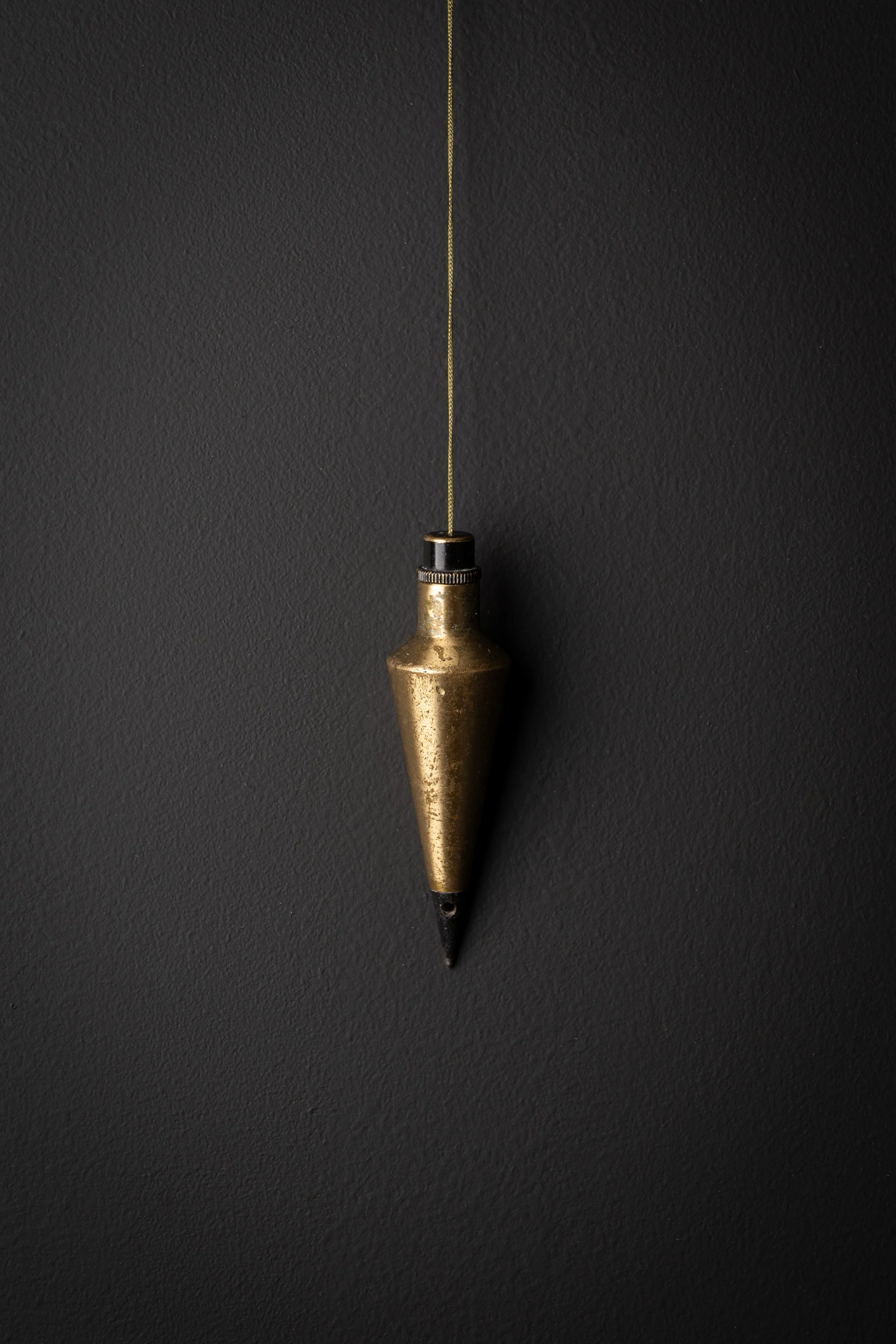
A brass plumb bob suspended against a dark background. Its simple form remains recognizable, even when the history of the hands that used it is unknown.
These things were made to do work, not to become artifacts. Someone once reached for them because there was a task at hand. That ordinary connection is what I want to remember.
The people may be gone. The work may have changed. But some of the things they held are still with us.
Explore the Object Archive
The Guildmark Object Archive is an ongoing photographic and editorial study of objects, their construction, their history, and the evidence they retain.
Explore the Object Archive, or begin with the Marlinspike and Farrier’s Hammer Object Studies.