Wood, steel, and the marks that remain.
ROPEWORK / HAND TOOLS
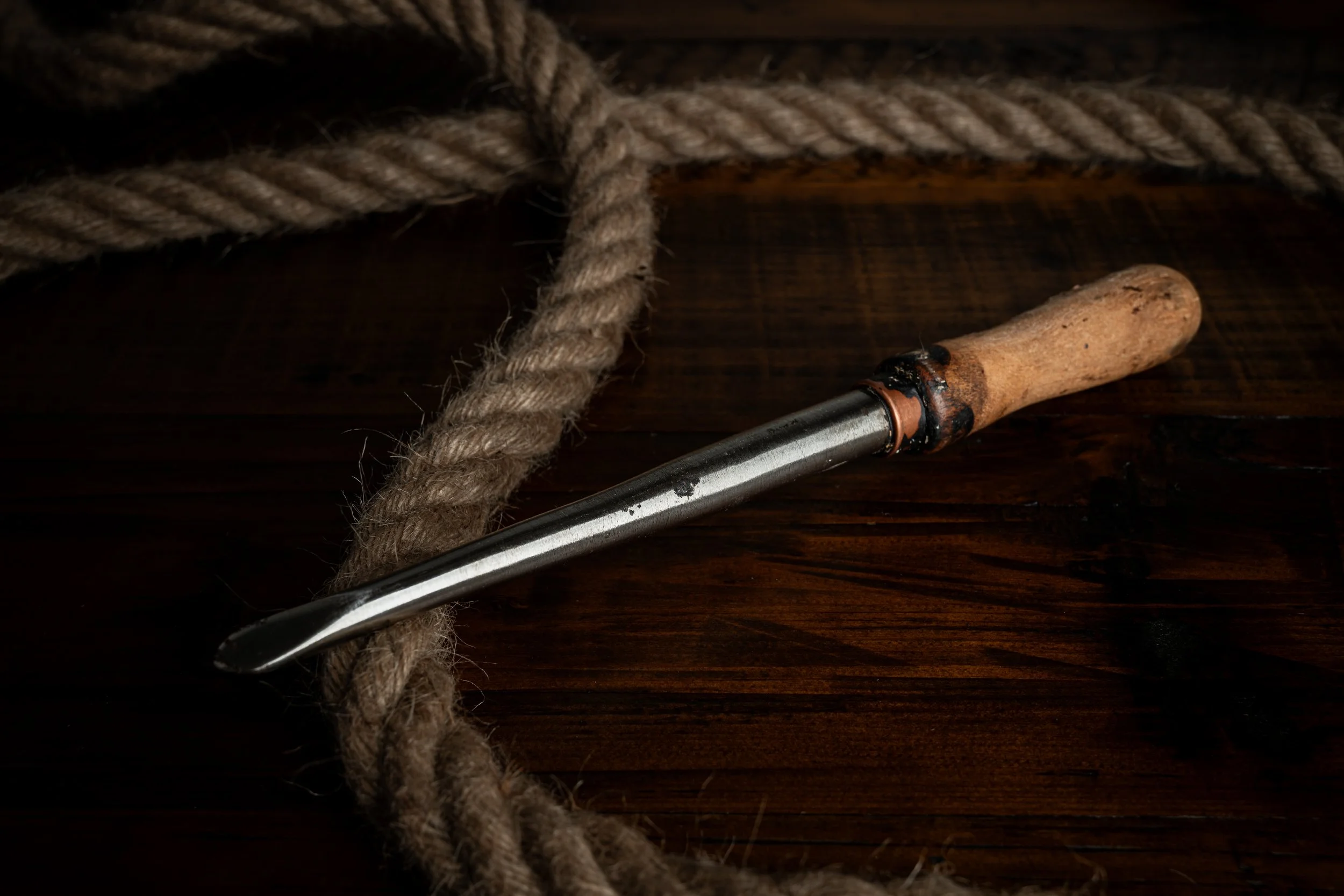
Wood, steel, and rope: an opening study of the tool’s form and proposed working context.
01 — The Object
A light wooden handle meets a long steel shaft. Near their junction, the name STORTZ is stamped into the metal. At the opposite end, the shaft narrows to a flattened, rounded tip.
Recorded here as a marlinspike, this tool is being examined through its construction, markings, and present condition. Its former owners and particular working history have not yet been documented.
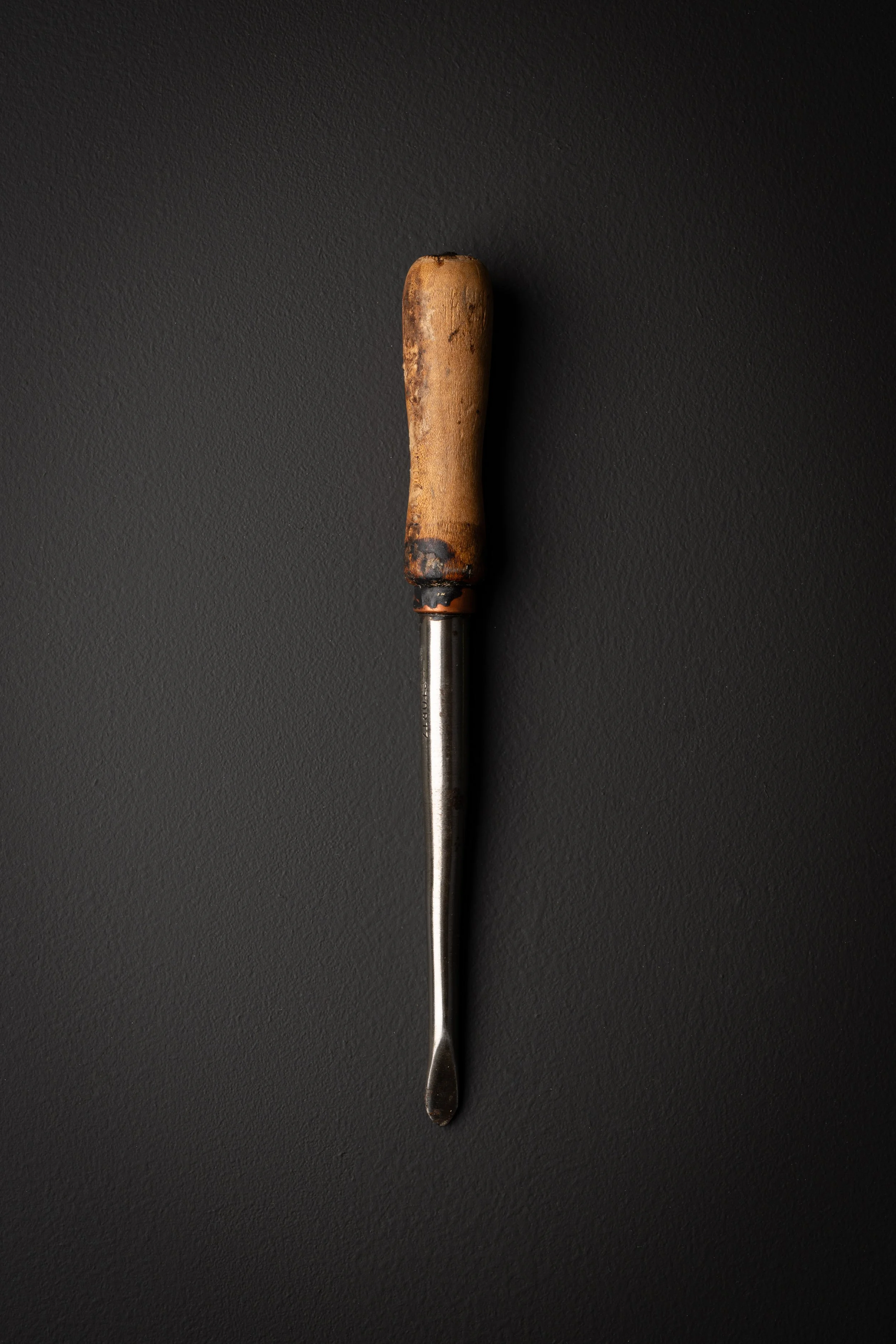
The full profile records the proportions of the handle, shaft, and working end.
02 — Design & Construction
The handle widens through the grip and narrows toward a collar at the base of the shaft. Dark coating remains around this junction, contrasting with the exposed wood and reflective steel.
The working end deserves a closer look. Rather than finishing in a needle-like point, it has a flattened face and rounded end. Photographing both the full profile and this detail records a feature that may help establish the tool’s precise form and intended application.
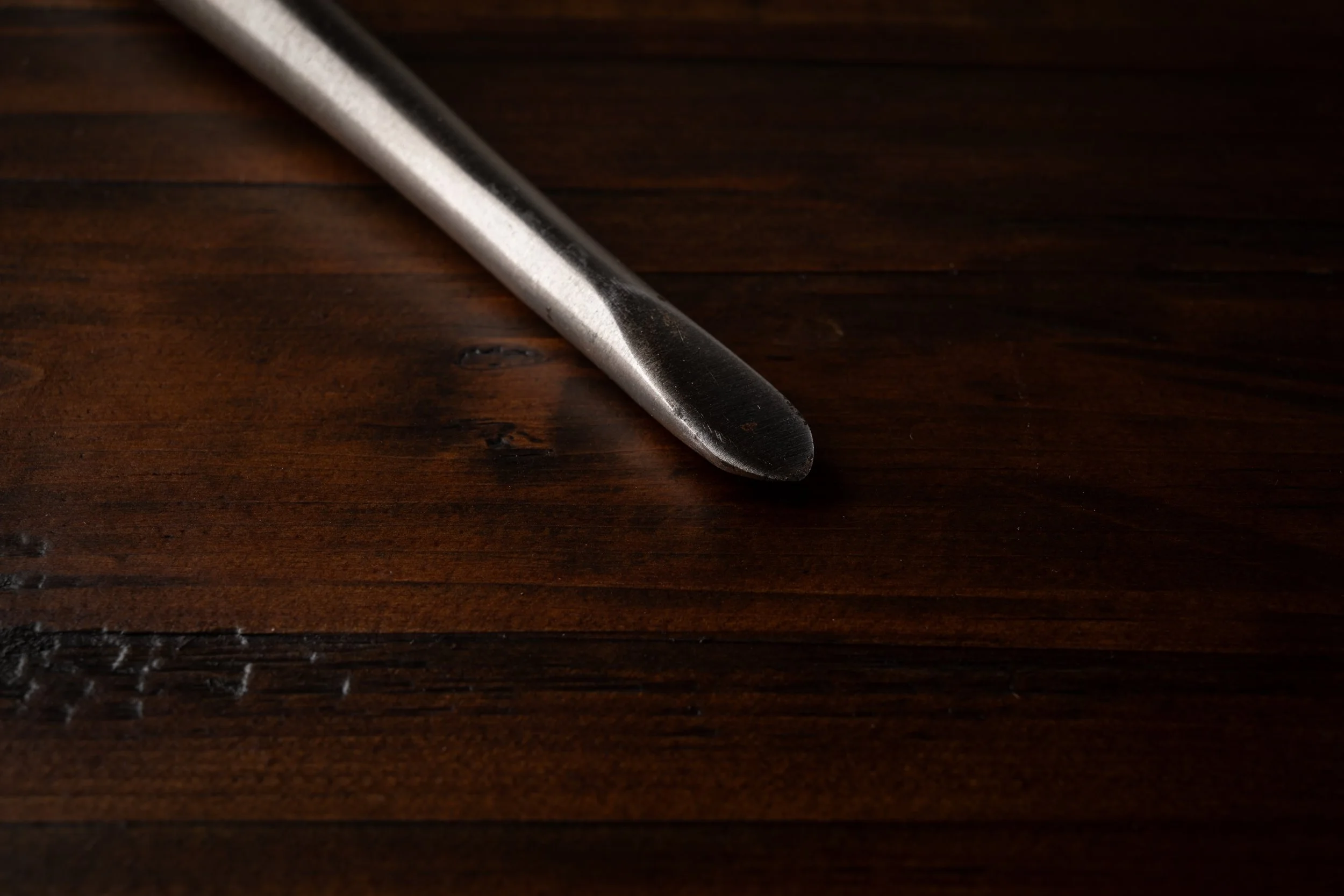
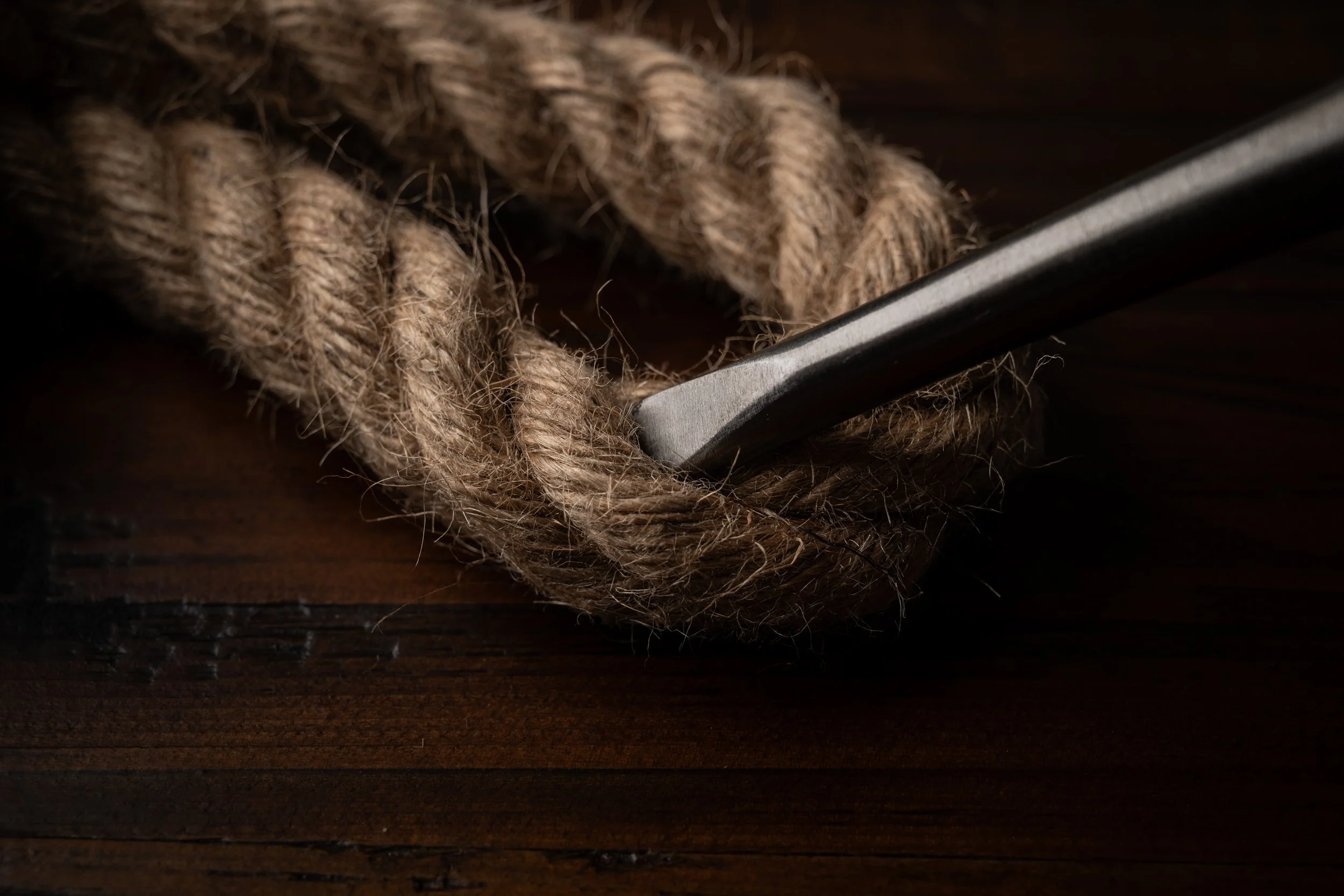
A staged view showing the working end positioned between rope strands.
03 — Evidence of Work
Small depressions and scratches interrupt the wooden handle. Its surface varies in color, with darker areas around the collar and at the handle end. Fine marks are also visible along the steel.
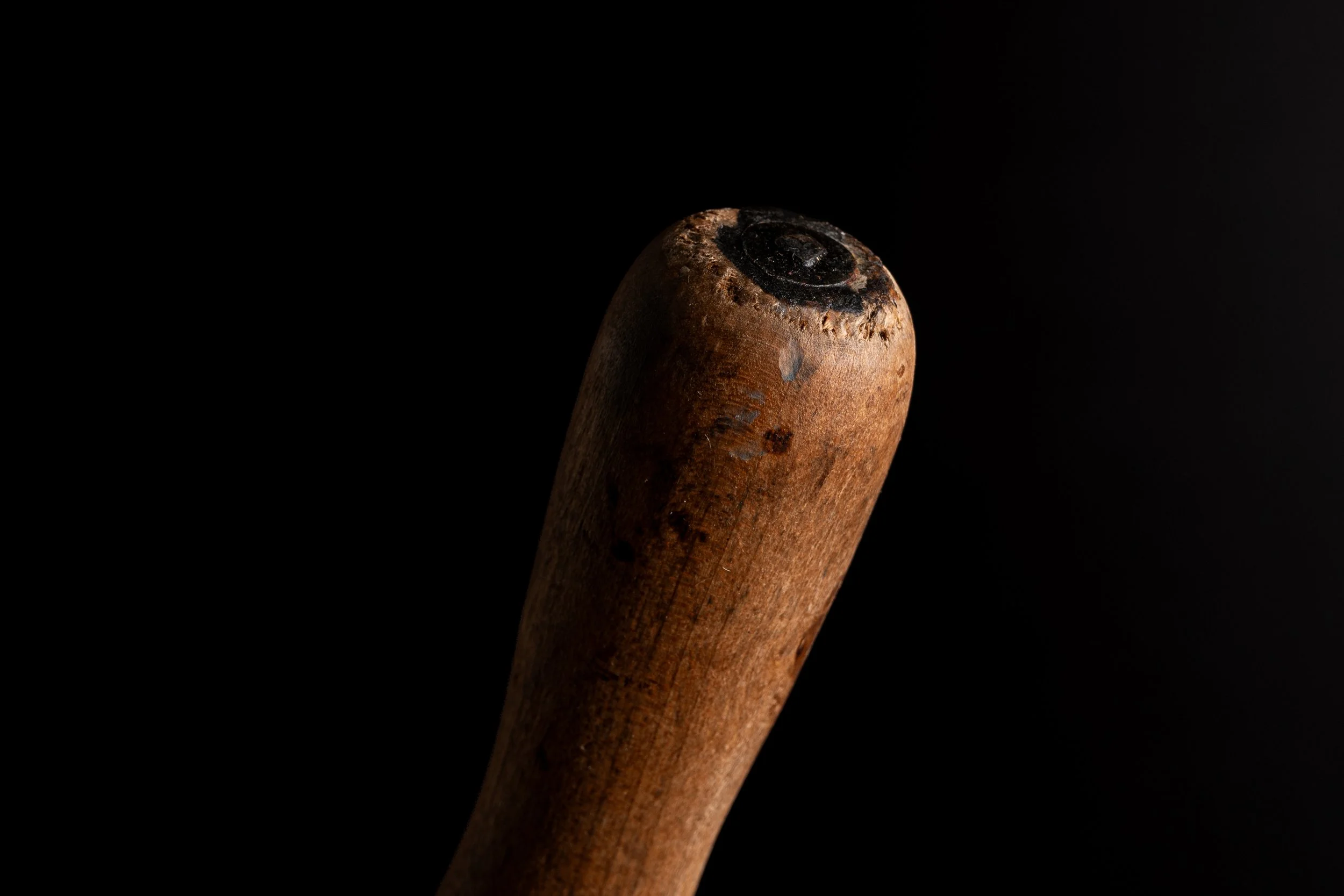
Depressions, surface marks, and darkening at the end of the wooden grip.
These details document the object’s present condition. Some may reflect handling and use; others may result from storage, surface treatment, or later cleaning. Their individual causes remain uncertain.
The photographs preserve those distinctions without assigning a separate story to every mark.
04 — Historical Context
Marlinspikes belong to the tools of ropework, used to open strands for splicing and to help loosen tightened knots. Historical museum records also document marline-spikes among sailmakers’ tools.
That broader context helps explain the tool type. It does not establish that this particular example belonged to a sailor, worked aboard a vessel, or dates from a particular period.
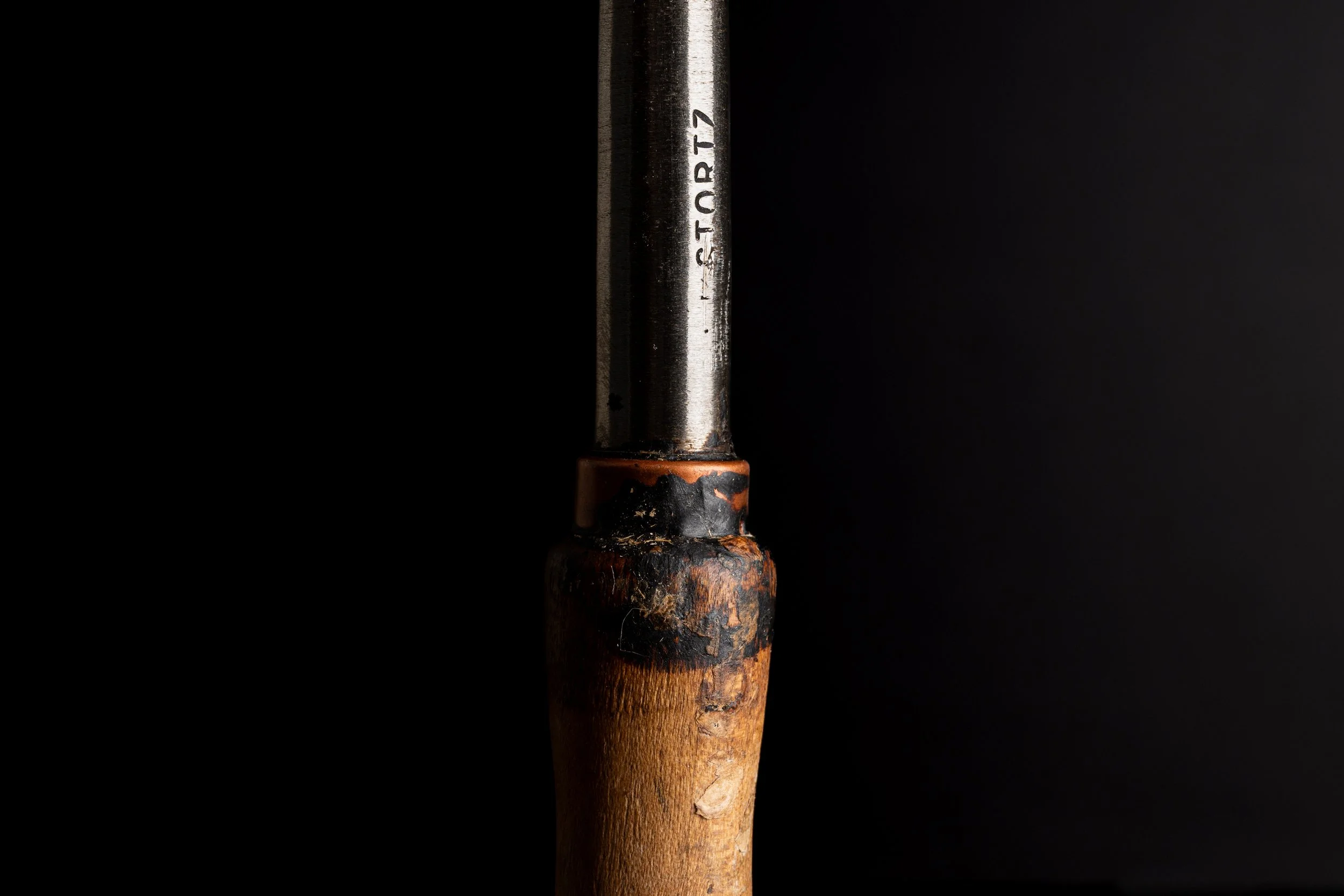
The STORTZ stamp provides a starting point for further identification. Matching the tool to a manufacturer’s catalogue would help clarify its model, dimensions, and original description.
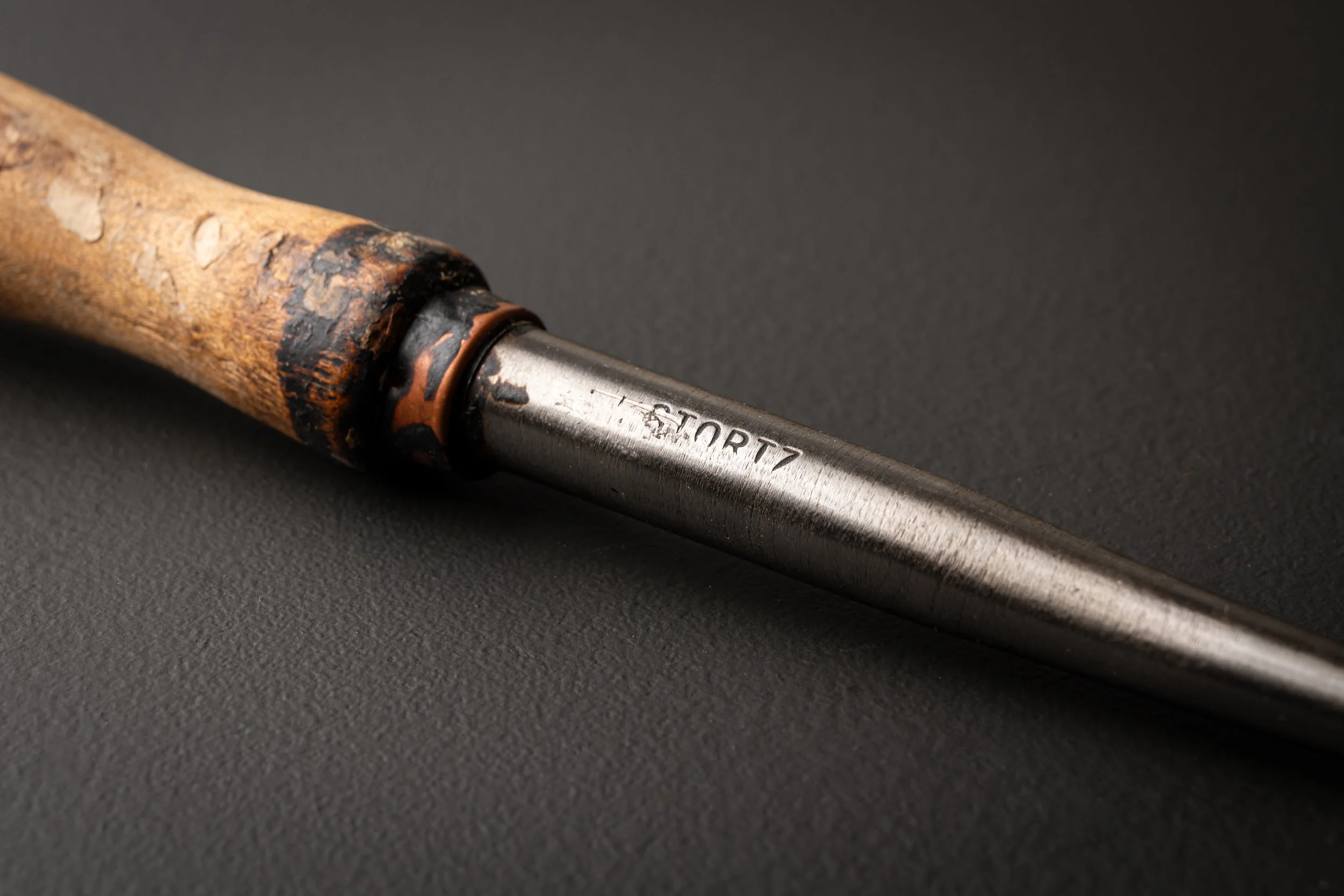
STORTZ, stamped into the shaft near the handle. The marking provides a starting point for identification.
05 — What Remains
The name stamped into the steel is still legible. The hand that held the wooden grip is unknown.
What survives is available to examine: the shape of the handle, the transition into metal, the flattened end, and the changes across their surfaces. Recording these details gives future research something concrete to return to.
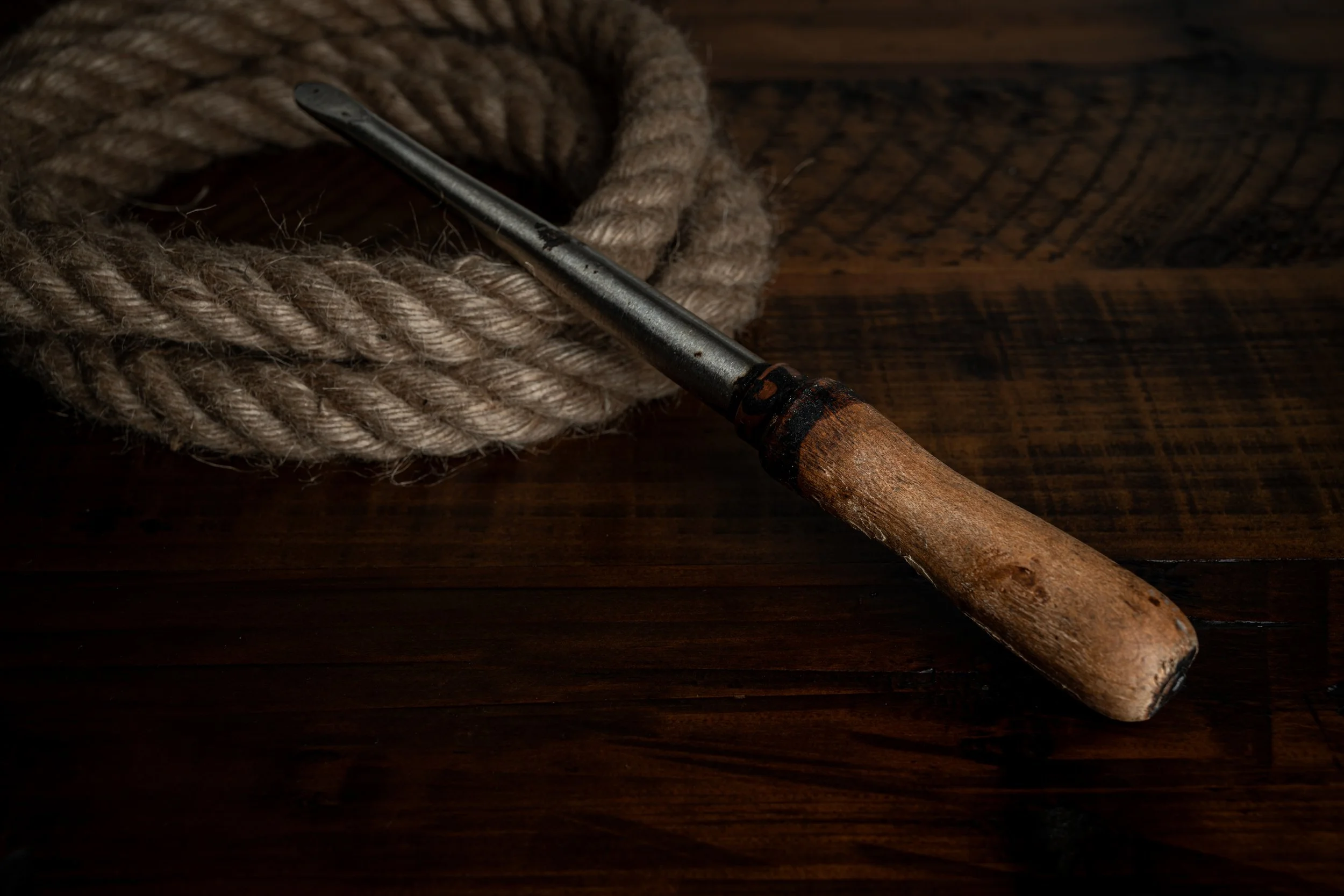
A final view of the handle, shaft, and working end alongside rope.
Object Record
- Object
- Marlinspike — provisional identification
- Materials
- Wood and steel; wood species undetermined
- Markings
- “STORTZ,” stamped on the steel shaft
- Maker attribution
- Stortz, based on stamped marking; attribution not independently verified
- Date of manufacture
- Undetermined
- Ownership history
- Not documented
- Dimensions
- Overall length: 10 5/8 in (269.9 mm) Handle length: 4 in (101.6 mm) Handle diameter, maximum: 1 1/8 in (28.6 mm) Exposed shaft length: 6 1/4 in (158.8 mm) Working-end width, maximum: 3/8 in (9.5 mm)
- Condition
- Surface marks, discoloration, and loss of dark coating around the collar
Sources & Research Notes
The shaft bears the stamped name “STORTZ.” Identification is based on the object's visible form and marking. Its exact model, manufacturing date, and previous ownership remain unconfirmed. Comparison with manufacturer catalogues is pending.
Rope shown in the photographs is a photographic prop and has no documented association with the object's earlier use.
Last updated:
Continue Exploring