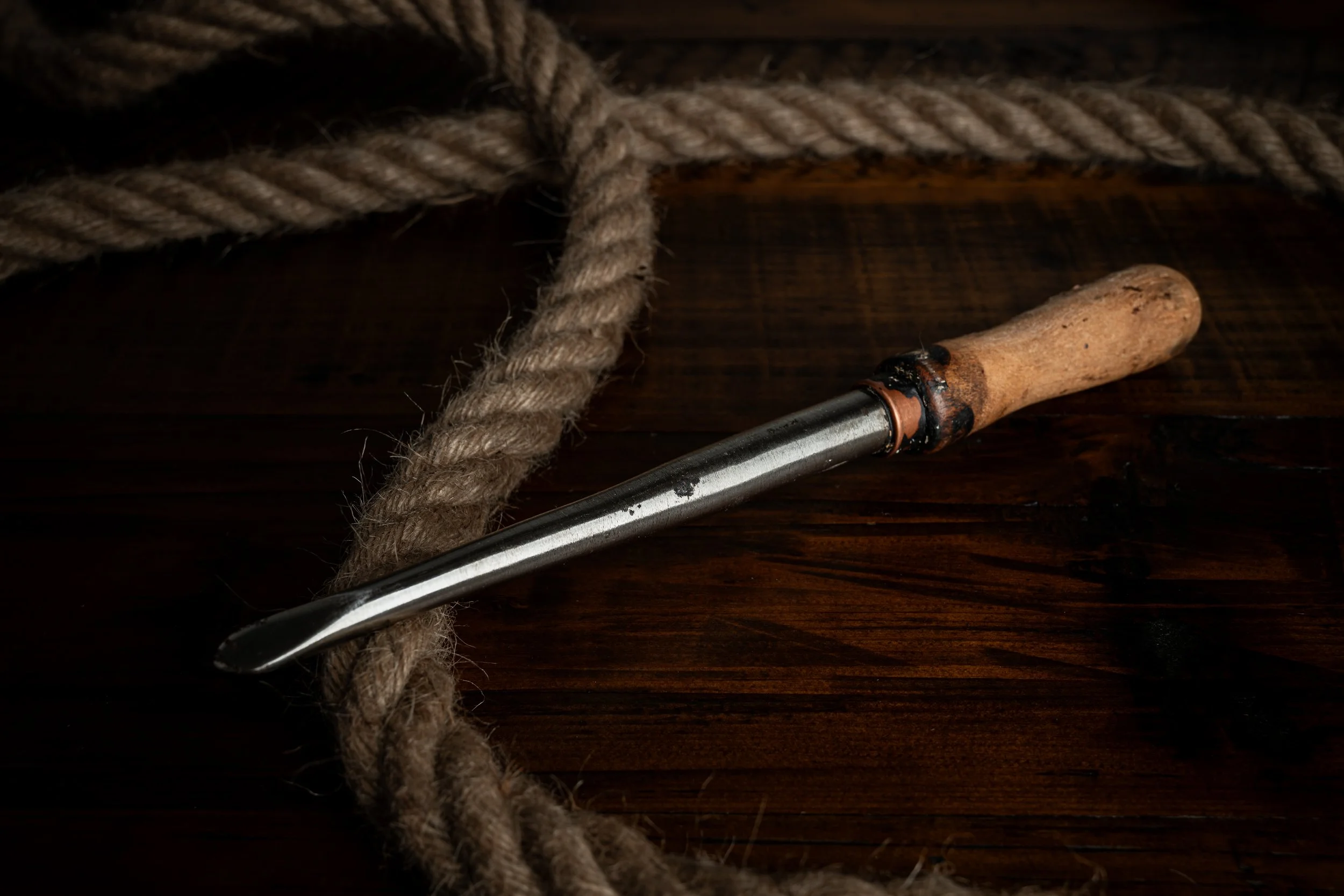
A round striking face, a divided claw, and the marks between.
FARRIERY / HAND TOOLS
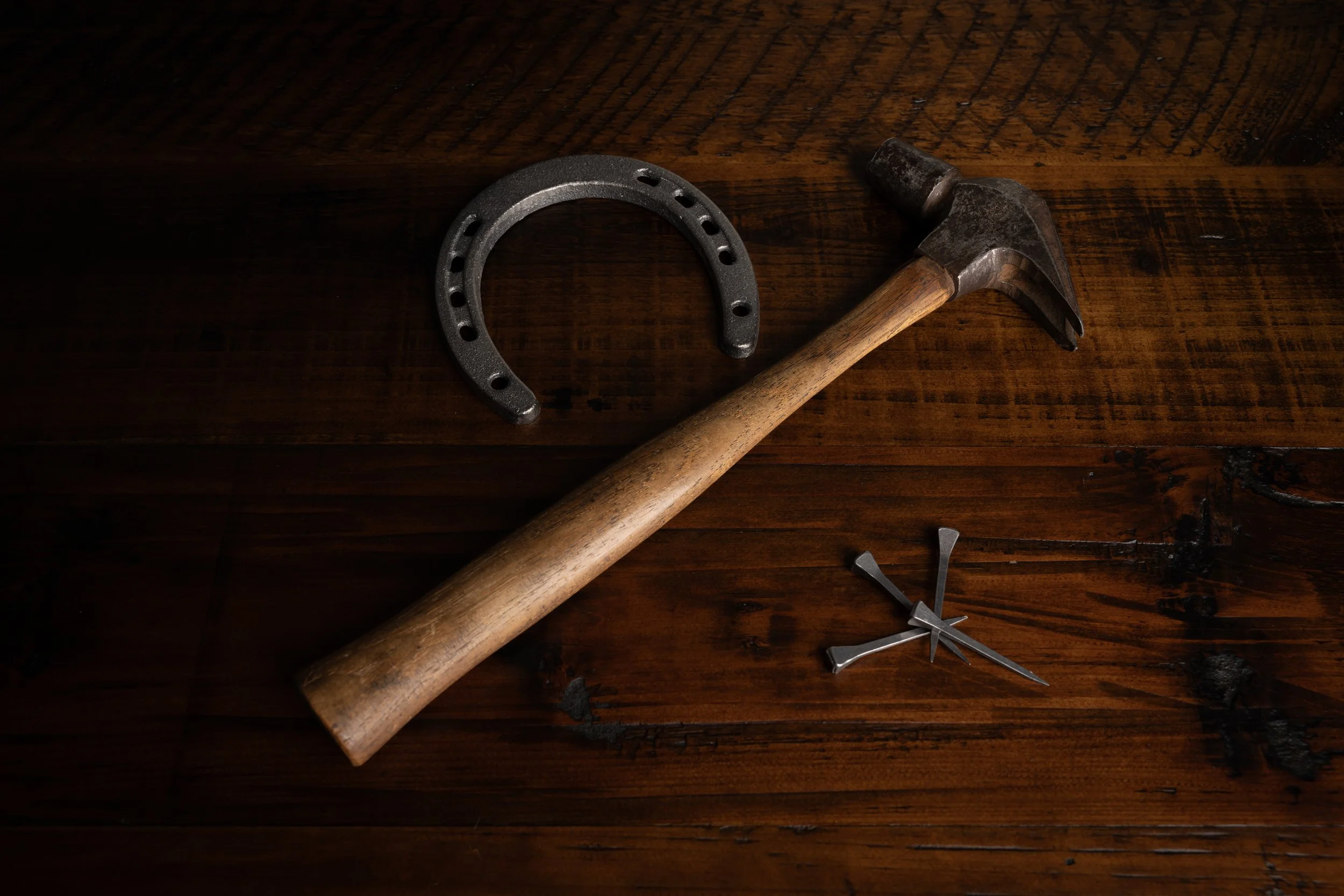
The hammer, horseshoe, and nails arranged to introduce the tool’s working context.
01 — The Object
A long wooden handle carries a compact steel head. One end presents a round striking face; the other curves into a divided claw. Together, these features identify the tool as a farrier’s driving hammer, used in the work of shoeing horses.
This study records the hammer’s form, construction, surface condition, and partially legible maker’s stamp. Its date of manufacture and former ownership have not yet been established.
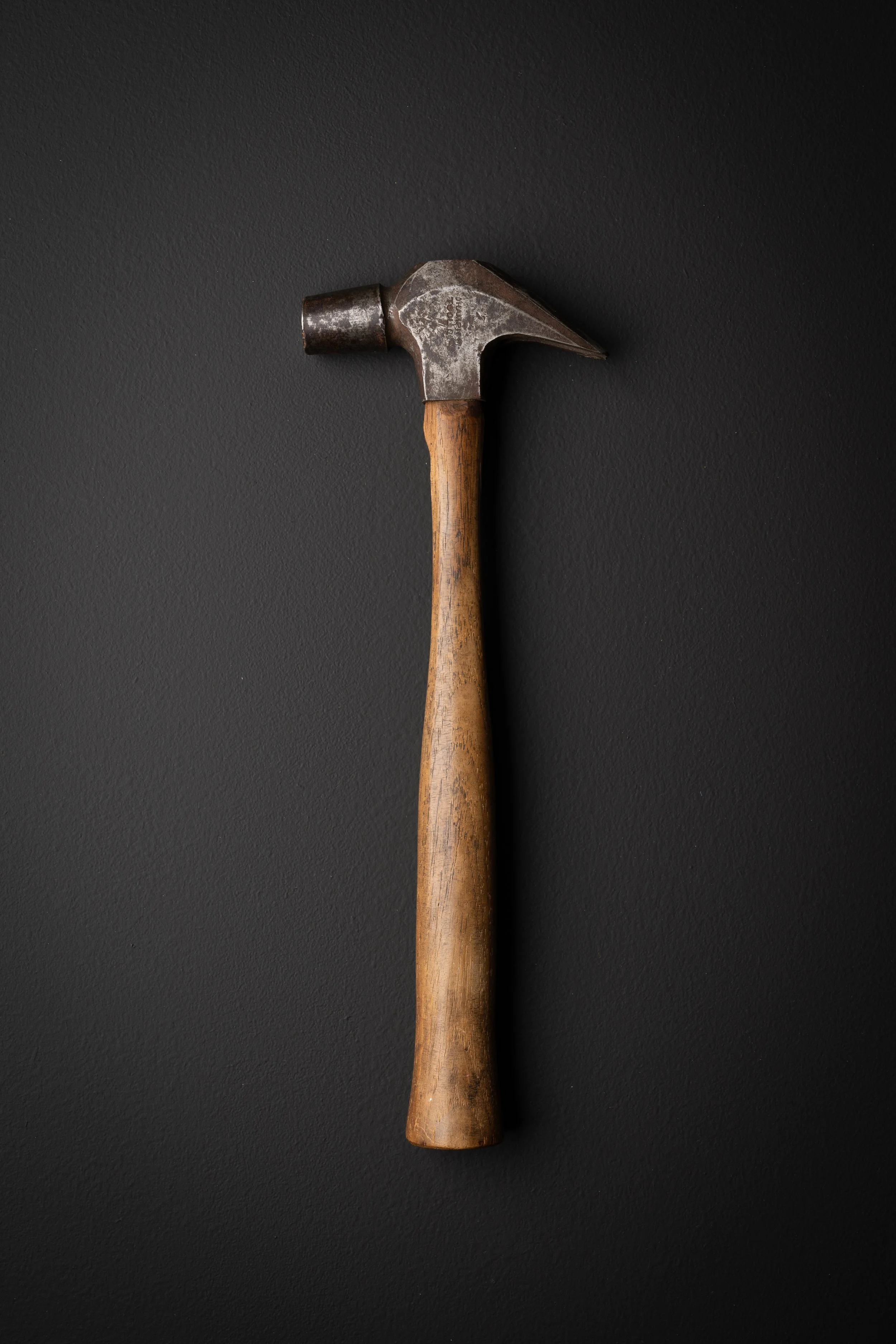
The full profile records the proportions of the wooden handle, round face, and curved claw.
02 — Design & Construction
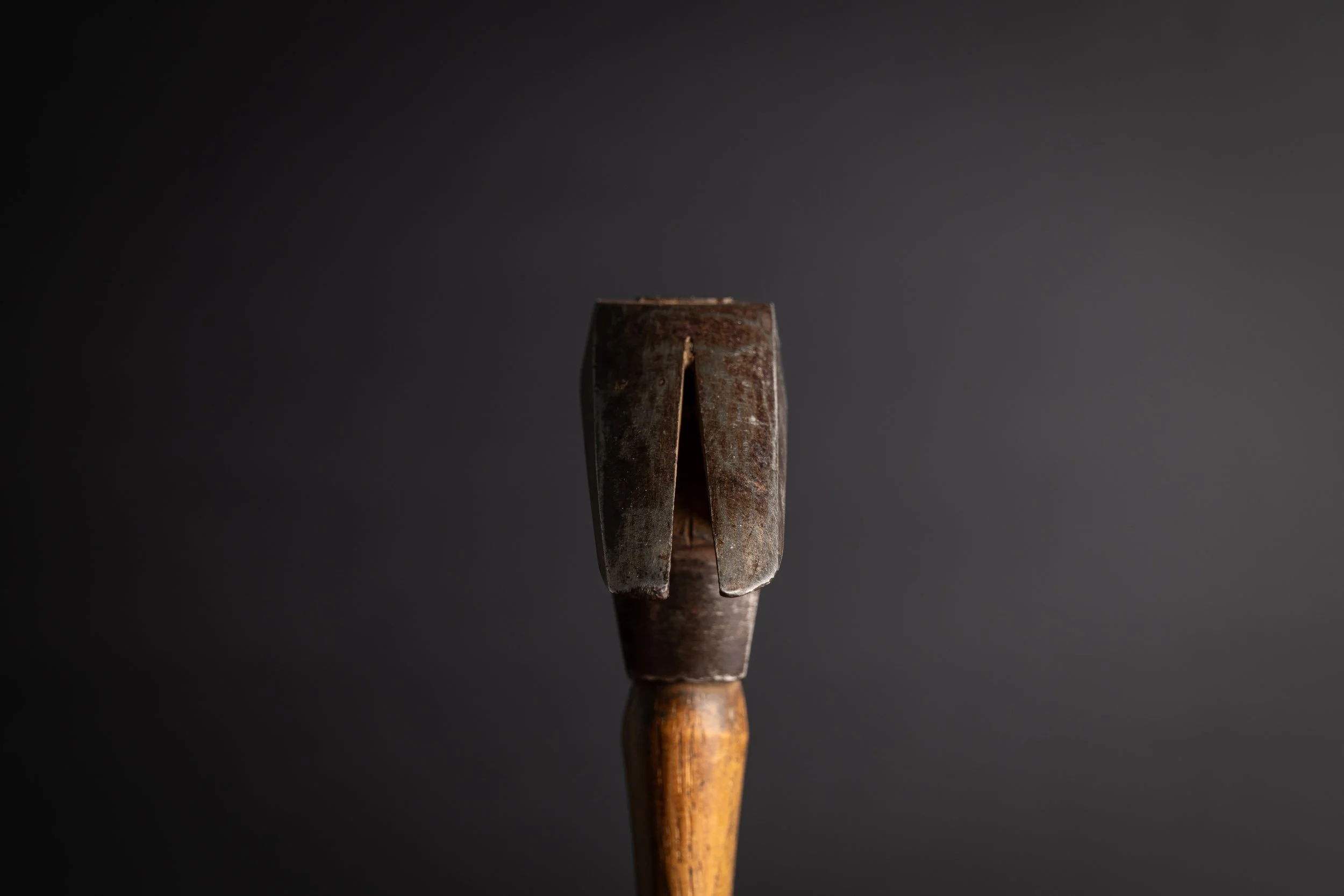
The head brings two different actions into a single tool. The round face delivers the blow, while the narrow split claw provides a means of engaging a nail.
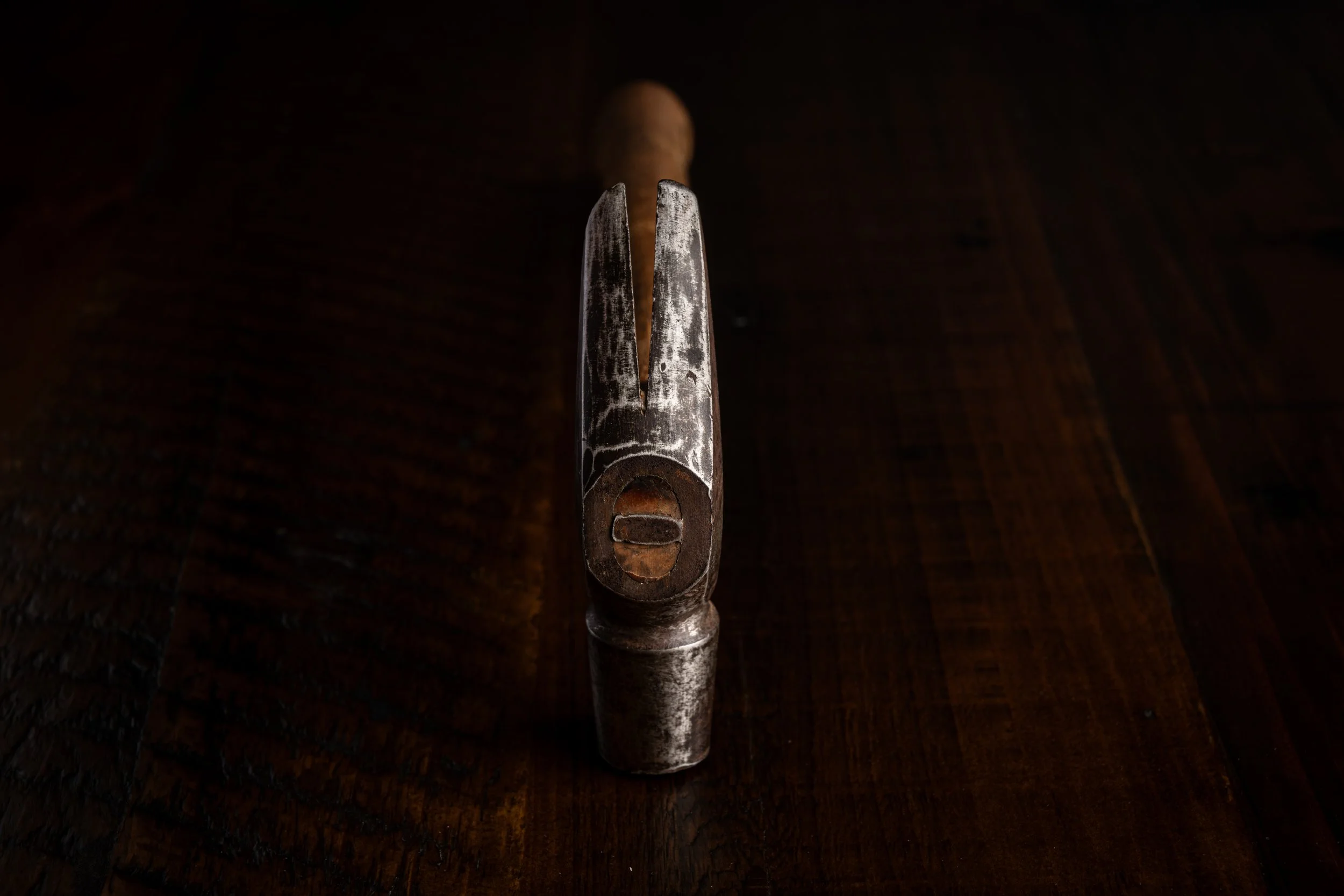
The wooden handle passes through the eye of the head. Viewed from above, a metal wedge is visible in the exposed end of the wood. This fastening detail is part of the hammer’s present construction; whether the handle is original remains unknown.
A staged photograph places a horseshoe nail between the claws, making their relationship easier to examine.
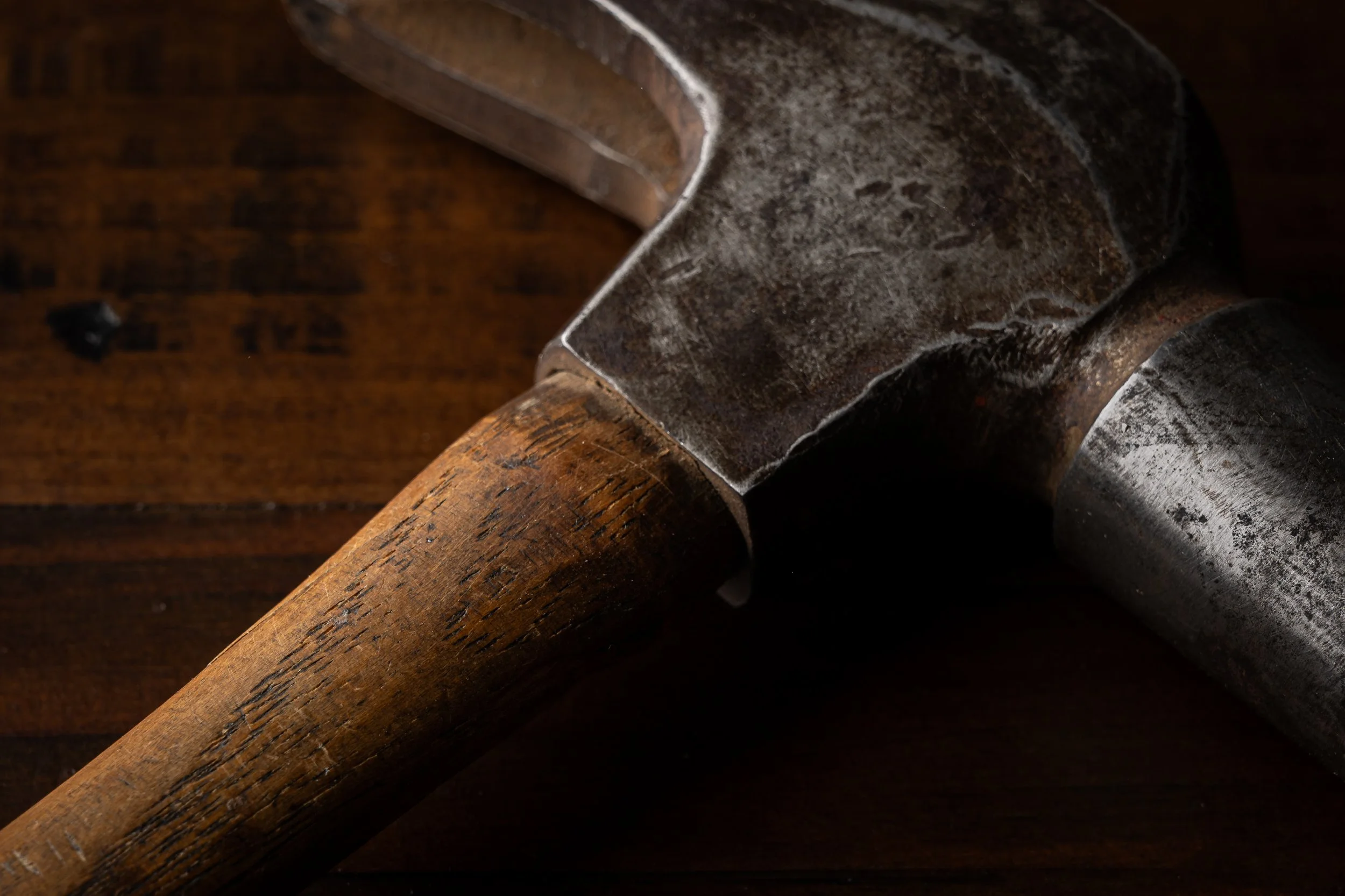
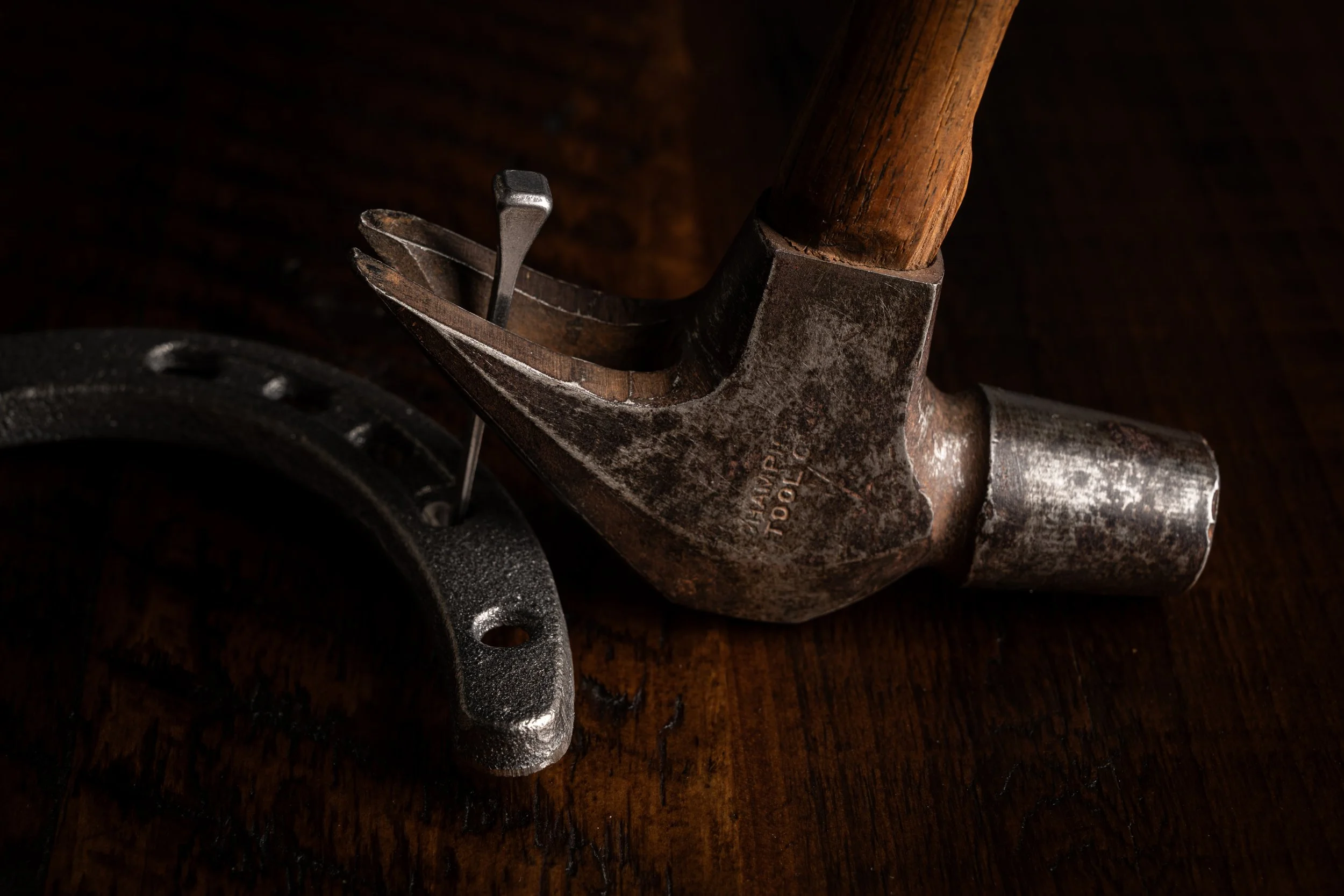
A staged view with a horseshoe nail positioned between the claws.
03 — Evidence of Work
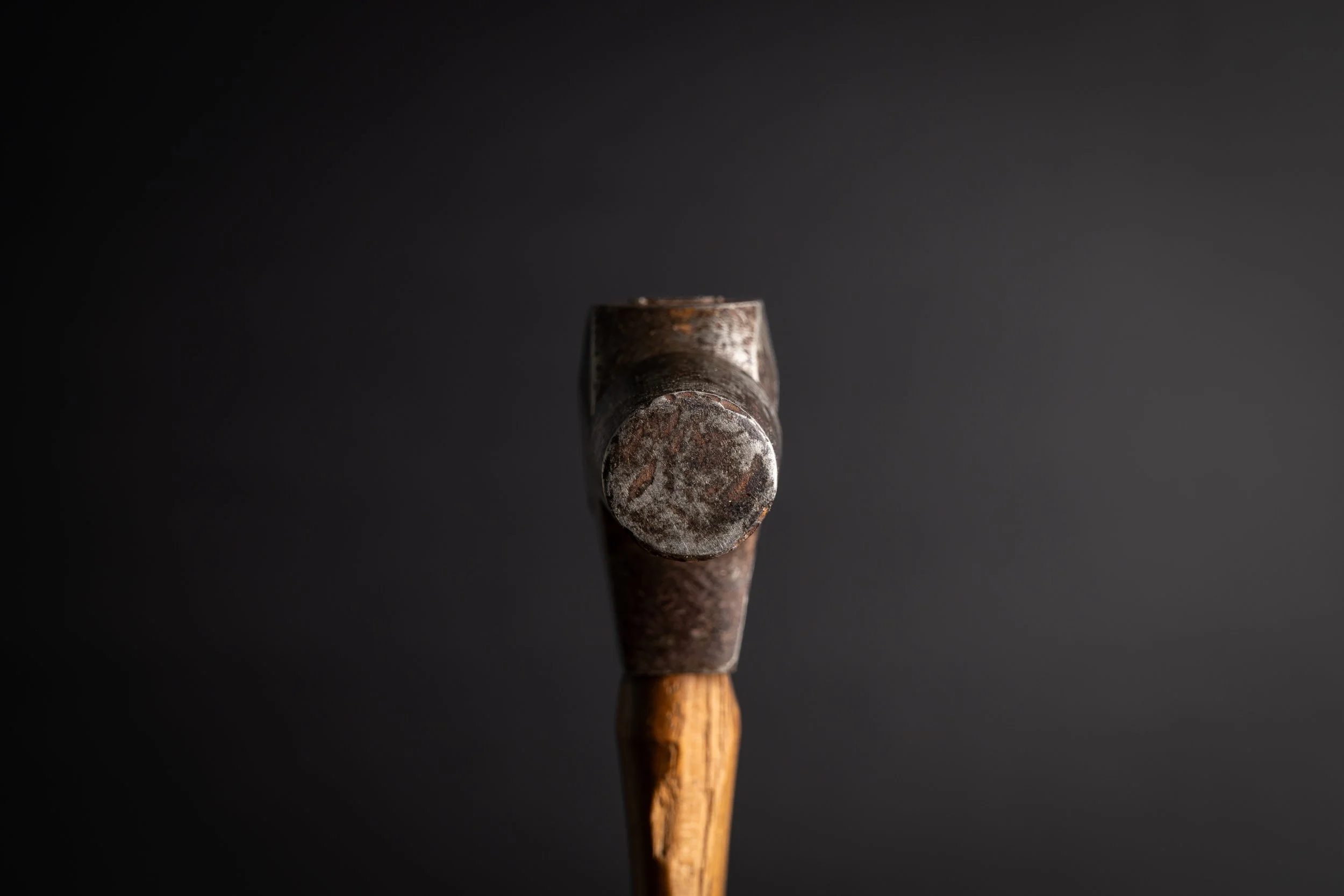
Fine scratches and small depressions cover the steel head. Its surface shifts between dark areas and brighter metal, while the striking face shows an uneven, mottled texture.
Along the handle, the grain remains visible beneath darker lines and scattered marks. The photographs record the transition from the wood to the head, as well as the surfaces touched by the hand.
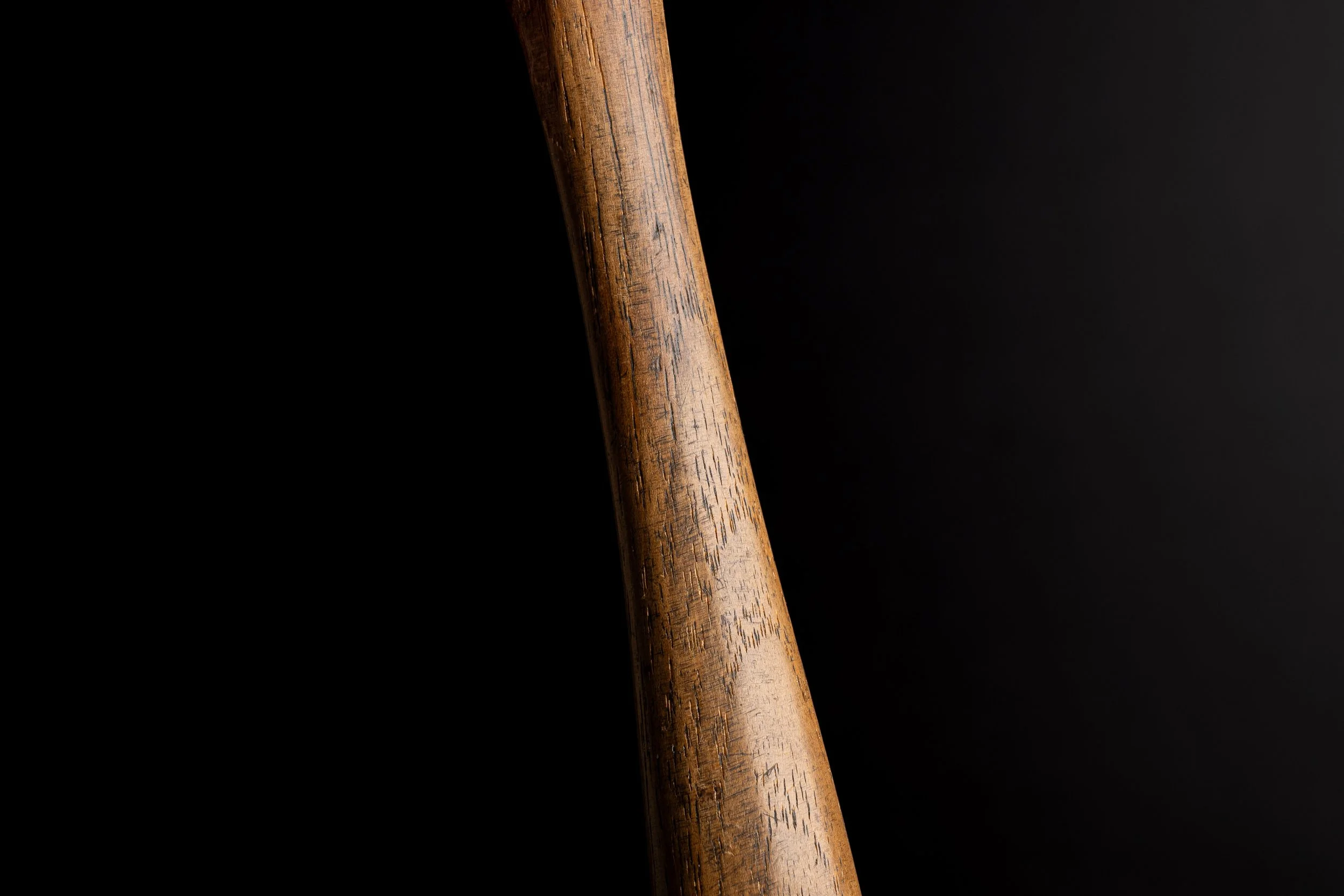
Grain, darkened lines, and surface marks along the wooden grip.
These changes are consistent with an object that has been handled and used, although individual marks cannot be assigned to particular jobs. Storage, corrosion, cleaning, and the possibility of a replacement handle also form part of the questions surrounding its present condition.
04 — Historical Context
A farrier’s driving hammer belongs to the nailing stage of horseshoeing. Its round face is used to drive horseshoe nails; the claw can assist with withdrawing a partly driven nail and working the projecting nail ends. It serves a different purpose from the heavier hammers used to shape a shoe at the forge.
The worn stamp on this head appears to read “CHAMPION TOOL CO.” That reading is provisional. Confirming the lettering and comparing the head with documented examples or catalogues are the next steps toward a maker attribution.
For now, the tool’s form gives us a firmer account of its function than of its individual history.
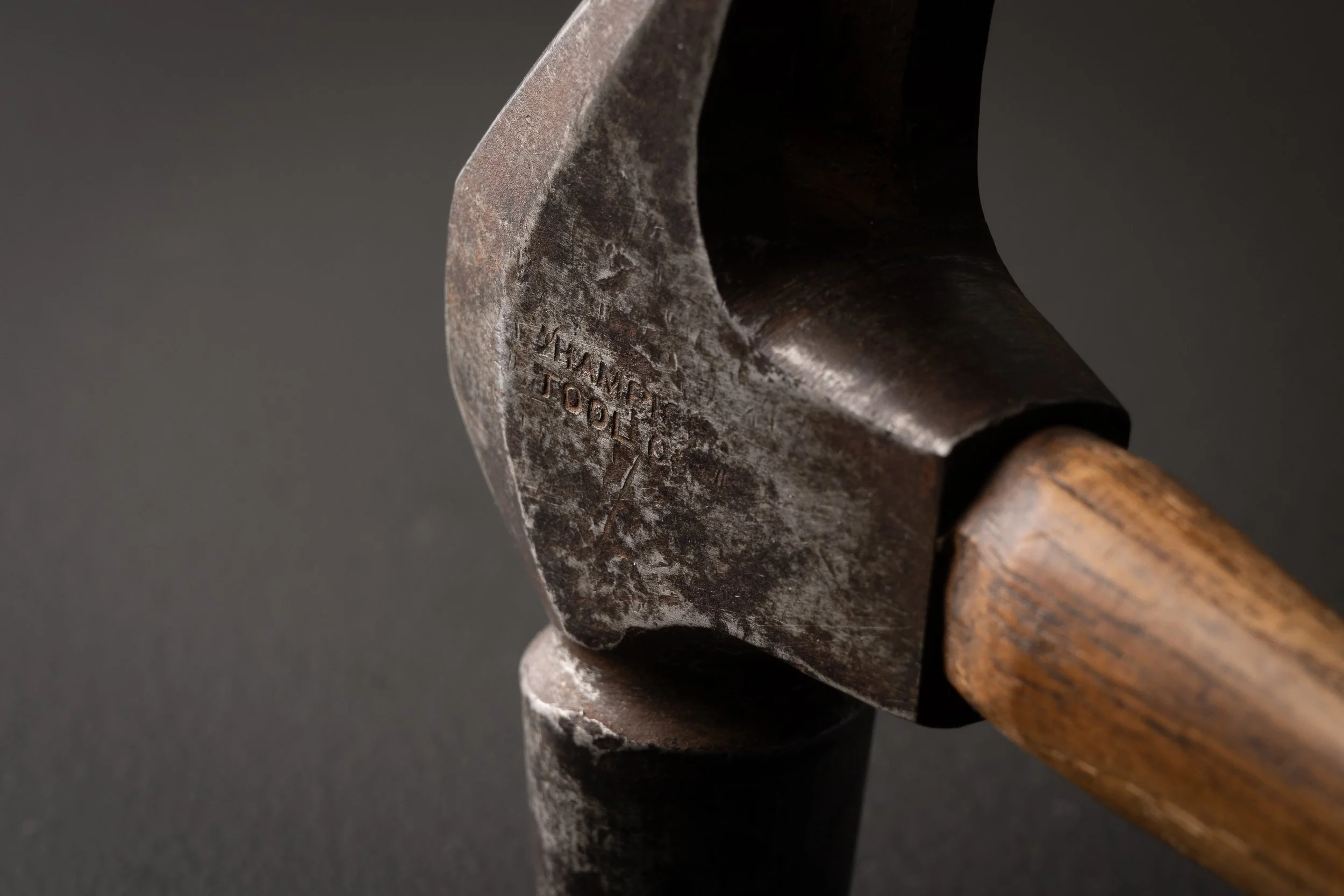
Partially legible lettering on the head appears to read “CHAMPION TOOL CO.” The reading remains provisional.
05 — What Remains
The face and claw make the hammer’s purpose legible. The smaller details hold the questions: the worn lettering, the wedge in the handle, and the changes across the steel and wood.
We do not yet know whose hand held it or where it was used. The study begins with what can be examined and recorded, leaving room for a more complete history to emerge.
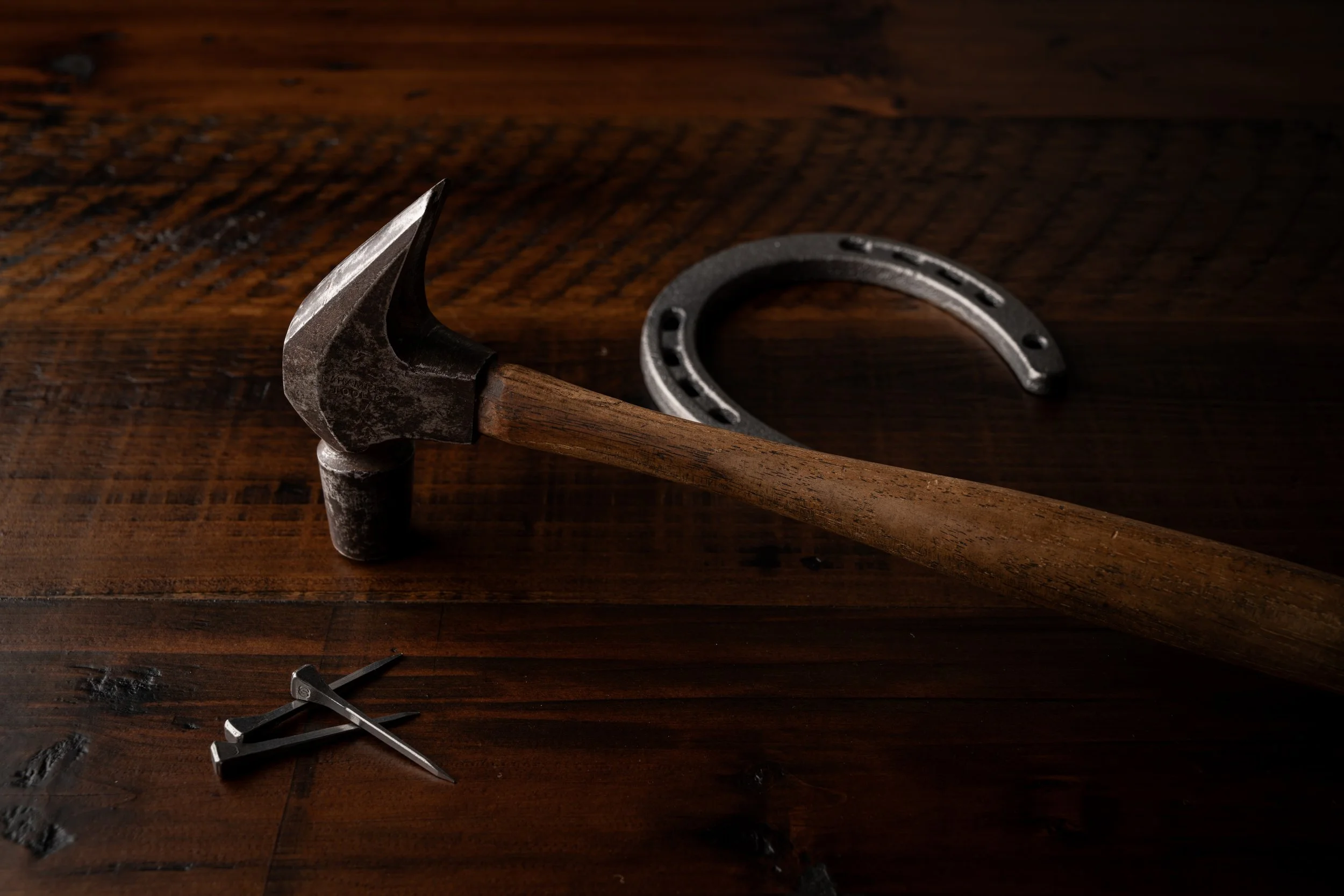
A final view of the face, claw, and handle alongside the materials used to illustrate their context.
Object Record
- Object
- Farrier's driving hammer
- Materials
- Steel head, wooden handle, and metal wedge; wood species undetermined
- Markings
- Partially legible stamp on head; appears to read "CHAMPION TOOL CO." Transcription provisional.
- Maker attribution
- Possibly Champion Tool Co., based on worn stamp; not independently verified
- Date of manufacture
- Undetermined
- Ownership history
- Not documented
- Dimensions
- Overall length: 12 in (304.8 mm) Exposed handle length: 10 in (254.0 mm) Head length, face to claw tip: 4 1/4 in (108.0 mm) Striking-face diameter: 3/4 in (19.1 mm) Handle width, maximum: 1 1/4 in (31.8 mm)
- Condition
- Scratches, surface discoloration, and uneven texture on the steel head; darkening and surface marks on the wooden handle.
Sources & Research Notes
The hammer is identified by its round striking face and split claw. The worn head stamp appears to read "CHAMPION TOOL CO." Confirmation of the lettering, maker attribution, and catalogue model is pending. Its manufacturing date, ownership history, and the originality of the handle remain unconfirmed.
The horseshoe and nails are photographic props. No association with the hammer's previous ownership or use has been established.
General tool reference: het MOT — Shoeing hammer. This museum record supports the identification of the tool type, not this object’s provenance.
Functional reference: Mustad — Driving Hammers. This modern manufacturer’s description explains driving-hammer functions; it does not identify the maker or age of this example.
Last updated:
Continue Exploring